The presentation of the recent document by the Dicastery for the Doctrine of the Faith, Dignitas infinita on the dignity of the human person (Rome, 8 April 2024), has placed on the table of public debate the firm commitment of theological thought to the dignity of the human person as the image and likeness of God.
The Prefect of the Dicastery, the Argentine Cardinal Víctor Manuel Fernández, recalled during the presentation of the document that the Church’s commitment includes all men without distinction of age, country, class, language, race, or religion. It is an eternal commitment and will remain so, since it concerns perennial truths that sustain the entire human society and the Church itself.
We have just celebrated the 75th anniversary of the Universal Declaration of Human Rights (1948), drafted at the end of two world wars and two atomic bombs in Nagasaki and Hiroshima, and the dignity of the human person has been consolidated as the foundation and basis of those rights and as the path for discerning new rights and resolving conflicts.
It is worth noting the solid foundations on which this declaration of the ordinary magisterium of the Church is based: Sacred Scripture, the Tradition of the Church, the continuity of the Magisterium from its origins to Pope Francis, and finally the theological and anthropological arguments that have been developed in our time.
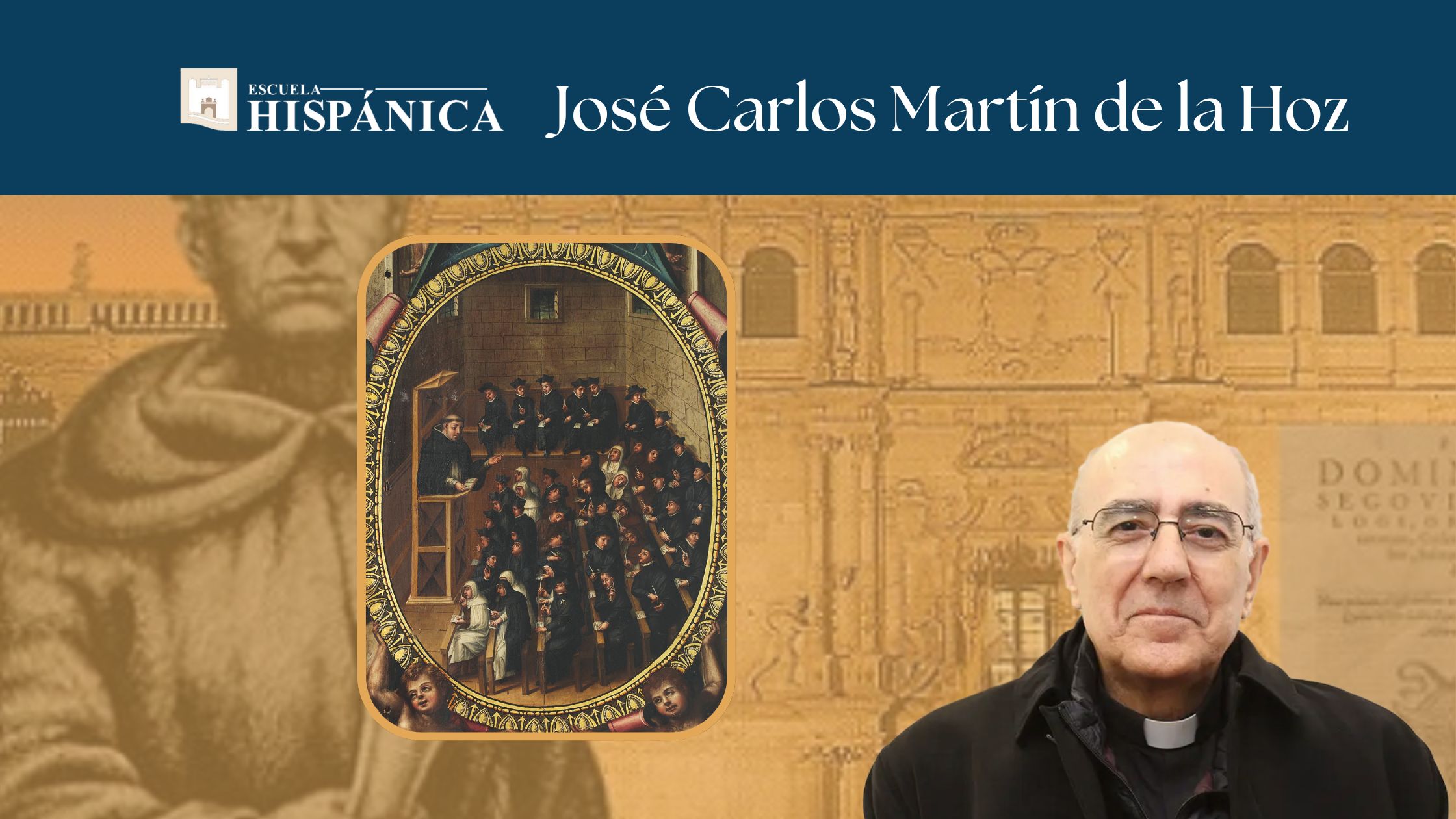
In particular, it is worth referring to the Relection of Domingo de Soto, delivered in 1555, entitled “An liceat civitates infidelium seu gentilium expugnare ob idolatriam?” In it, the first successor of Francisco de Vitoria in the Chair of Prima of Theology at the University of Salamanca expounded and developed Vitoria’s doctrine on the freedom of the Indians as subjects of the Crown of Castile. Domingo de Soto’s arguments complement those of Vitoria regarding the capacity of the Indians to govern and organise their lands according to the Laws of the Indies, like any other citizen of the Empire.
In view of the recent insistence of the Church’s Magisterium in denouncing all violations of human dignity in a globalised world, Domingo de Soto’s teachings on the freedom of human beings to travel throughout the world, to settle anywhere in creation, and to exercise dominion over created things with a dominion analogous to that of the Creator, resound strongly in our ears. Naturally, this now involves great complexity.
Likewise, Domingo de Soto and the other members of the School of Salamanca fought tirelessly against royal and municipal taxes in the kingdoms of Castile for the simple reason that they were aware of the economic hardship of the times in which they lived. Each tax established in the Cortes was widely debated and delimited. Evidently, those Salamanca thinkers also saw the need to set limits to royal power and its voracious appetite for revenue. Naturally, these issues gained prominence with the arrival of American silver and gold.
Immediately, we must highlight the optimistic sense shown by the Salamancans in all their writings about human nature. First of all, out of fidelity to the basic Thomistic principle:
gratia non tollit naturam, sed perficit — “grace does not destroy nature but supposes, heals, and elevates it” (Summa Theologica, I–II, q. 110, a. 1).
This was a key issue, since Luther’s attack on good works stemmed from the markedly voluntarist and semi-Pelagian character with which some authors emphasised the concept of virtue, as if men could merit something by their own poor deeds. To recall Scripture:
“We are unworthy servants; we have only done what was our duty” (Lk 17:10).
Francisco de Vitoria’s notes in his Relectiones on the Indians went beyond pious considerations about the rights of the Indians—their minority and need for protection in labour rights—to delve instead into the dignity of the human person. Precisely, Domingo de Soto’s treatise De natura et gratia (Venice, 1545) proved crucial in elucidating the matter. Indeed, Session VI of the Council, contained in the Decree De iustificatione, emphasises the same relationship between nature and grace that Domingo de Soto had established, almost in the same words, and refers to the gift of God of the beatitudes and holiness.
In the thirteenth century, Saint Thomas Aquinas, in his Summa Theologica (II–II), masterfully expounded the relationship between the Christian virtues as good operative habits governed by prudence—both human and supernatural prudence—as one of the four cardinal virtues (Summa Theologica, II–II, q. 47, a. 4).
What the Salamancans underlined was not so much personal effort or the struggle for holiness—as if holiness were a matter of fists—but that Saint Thomas had placed the emphasis on the word habitus, the “good operative habit”. That is, as an intrinsic fruit in the soul, just as law would be extrinsic (Summa Theologica, I–II, q. 5, a. 5).
Finally, the concept of freedom of the School of Salamanca in general, and of Domingo de Soto in particular, is of great relevance today. Our master reminds us that human freedom is created, limited in its exercise of free will and capacity for choice, but infinite in its power to set the means in order to the ultimate end. That is, the energy of freedom to love God and others, and to build a just and united society.
It is interesting to realise how this concept of freedom belongs to a new humanism, far superior to the Renaissance humanism which had begun by placing man at the centre of the constellation of thought as the image and likeness of God, but ended up making him, in practice, a man destined for the pleasures of life, for the contemplation of art and beauty, and ultimately stupefied by sensual pleasures that distracted him from the vision of eternity and transcendence along the paths of a free will close to Epicurus.
It was logical that this should happen, for in returning to the classics, as Renaissance humanism recalled, it did not take long to discard Saint Basil’s recommendation in his Address to Young Men, when he explained that one should take from the Greek and Latin classics what referred to man as the image and likeness of God, and leave aside the base passions that materialised him.
Indeed, Vitoria and the School of Salamanca, as well as Erasmus of Rotterdam and Luis Vives, distanced themselves from Luther insofar as he denied the concept of freedom in his treatise De servo arbitrio.
All those who sided with the truth walked together in favour of what Saint Thomas called the strength of freedom: vis electiva mediorum servata ordine finis (Summa Theologica, I, q. 19, a. 10) — “the power of choosing the means in order to the ultimate end.”
The self-determination towards the good possesses such energy and strength that John Paul II, in the Encyclical Veritatis Splendor (6 August 1993), spoke of truth as shaping freedom. Only Christ and His irresistible gaze can direct this divine gift.
Saint Josemaría would go a step further and call the strength of freedom the energy of freedom, reminding us of its capacity to make us pleasing to and worthy of praising the Creator, as can be seen in the homily Freedom, a gift from God, contained in the volume Friends of God.
Finally, in the same line as Domingo de Soto and the ships that set out to conquer and evangelise the Americas, we may take up Edith Stein’s concept in her Theology of the Cross, where she referred to freedom as the courage of freedom. To love God and to change the world in order to illuminate it from within requires both courage and humility.
Precisely in these days, when our freedom is being deeply attacked in many parts of the world and by the governments of many countries, it is necessary to return to the origin of freedom, to take strength, to defend it, and to live it.
If we observe the end of the civilisation of the welfare state, we shall see that it is already tottering on the brink of collapse, and we shall highlight the unjust inefficiency of oppressive taxation and the growing loss of freedom in an increasingly unbalanced world.
Just as the loss of freedom led to the enlightened despotism that paralysed Europe at the end of the Enlightenment and led it to revolutionary cycles, we too shall suffer the blow of social revolutions in the coming years unless we overthrow the absolutist state that oppresses us and once again give breath to private initiative, which already has sufficient social maturity to be set free.
Prof. Dr José Carlos Martín de la Hoz
Academy of Ecclesiastical History
This article was originally published on the website of the Centro Diego de Covarrubias (Spain) on 26 November 2024. Available here.