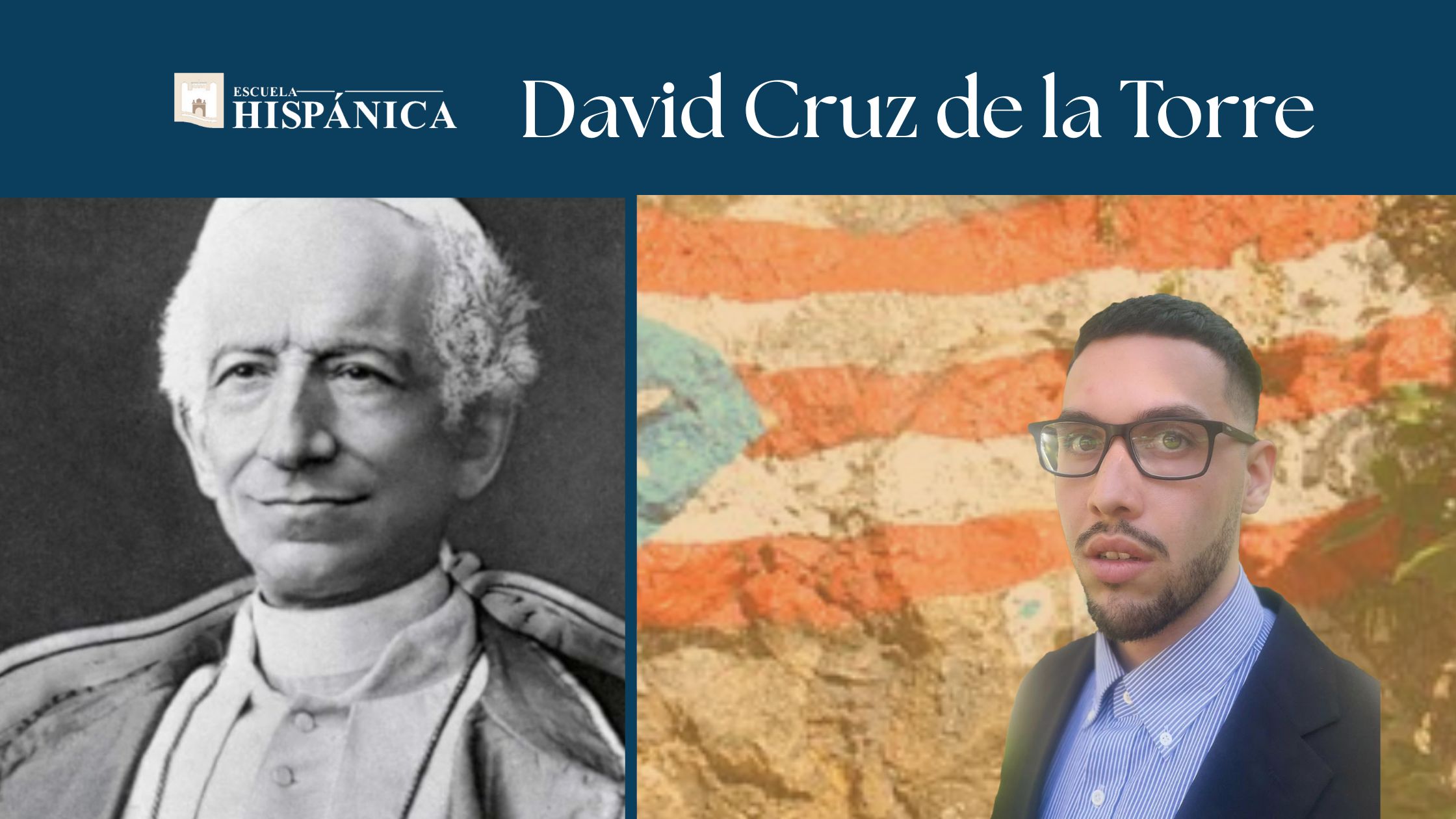
The election of Pope Leo XIV immediately evoked the figure of Leo XIII, especially among Catholics aware of the intellectual history of the Church. It was precisely Leo XIII who, with the encyclical Rerum Novarum, inaugurated a doctrinal front against the errors of socialism and the disregard for the natural order. Considered the first social encyclical, it constituted a turning point for Catholics eager to articulate a firm and coherent response to the challenges of modernity.
Today, with the rise of Leo XIV, many observers have noted that Rome seems to be resuming that very same cultural and intellectual battle: the struggle begun by Leo XIII has not concluded. Some of the challenges posed then persist, such as the confrontation with communism and its allied ideologies—now masked in new cultural trends—the advancement of disruptive technologies (such as artificial intelligence), and the risks to global peace and prosperity. In the face of such realities, it is imperative to remember that the world continues its course, and in that movement, a balance sustained by the principles of peace and universal brotherhood is required. In this sense, it could be asserted that, if peace bears fruit, then—in moral terms—we are also witnessing a superior form of free market.
From a Christian and humanist perspective, it becomes indispensable to turn to a deeper, more discerning view that allows recognition of the intellectual foundations legitimising the defence of the free market. Such is the legacy of the School of Salamanca, a true crucible of juridical, economic, and moral thought at the dawn of modernity. Within this institution, the first modern concepts of natural law, fair commerce, and sovereignty were elaborated, exerting decisive influence on the shaping of the political and legal order internationally. Its imprint extends both to the formation of the United States and—less known but equally significant—to the historical and cultural configuration of Puerto Rico.
Indeed, Puerto Rico maintains direct links with this legacy through the Convent of Saint Thomas Aquinas, founded by Dominican friars such as Fray Antonio de Montesinos and Fray Luis Cáncer. In 1532, the papal brief In splendide die of Pope Clement VII granted apostolic recognition to the Estudio General of the convents of San Juan and Santo Domingo. Through this development, it is possible to assert with reasonable certainty that professors trained at the University of Salamanca participated in the origins of higher education in America, particularly on the island of Hispaniola.
After 1898, Puerto Rico became a singular case within the Hispanic-American sphere: a Catholic and Hispanic society under the authority of an Anglo-Saxon and Protestant power. Few comparable cases exist in the world—perhaps Gibraltar, though with substantial differences. Under these circumstances, Leo XIII made a decision that is fundamental, though scarcely recognised today. In 1903, through the apostolic brief Actum Praeclare, he arranged for the Ecclesiastical Province of San Juan de Puerto Rico to be directly subordinated to the Holy See, thus preserving its Hispanic ecclesiastical identity against the ecclesiastical influence of the United States. This measure was not merely symbolic: it constituted a strategic affirmation of Puerto Rico’s cultural, juridical, and spiritual belonging to the Hispanic world.
During the twentieth century, particularly in the context of the Cold War, the island offered economic and cultural refuge to numerous exiles from Cuba, the Dominican Republic, Venezuela, and Spain. In all these cases, Puerto Rico was perceived as a space of economic freedom, institutional stability, and family values. Nonetheless, a paradox persists: despite its cultural resistance to socialism, the island today faces a weakened economy, heavily dependent on federal resources, and an administration aware of its own fragility.
Much has been written about this situation, but little attention has been paid to the enduring ties established by Leo XIII between Puerto Rico and Rome. These bonds allow us to assert that the development of Puerto Rico as a United States territory has unfolded under an alliance—one might even say “nuptial”—with Hispanidad, blessed by Leo XIII. This union, juridical, cultural, and spiritual in nature, was not coincidental but a deliberate affirmation of identity within a new political structure.
Facing the contemporary challenges that Pope Leo XIV begins to signal—the dehumanisation of the economy, institutional fragility, moral vacuum—the principles that inspired the School of Salamanca and forged the Hispanic tradition of liberty remain relevant. These values, which influenced both American constitutionalism and the Puerto Rican ethos, could underpin a new stage of intelligent and strategic integration between Puerto Rico and the wider world. Such a stage would require revitalising the local productive fabric, fostering exports, and engaging more actively in the economic flows of the Hispanic Atlantic, preferably through public-private partnerships.
Indeed, for more than a century, Puerto Rico has constituted—with its difficulties and contradictions—a refuge for those seeking to prosper and live in peace, even in the most critical moments of contemporary Western history. The most pressing problems it faces today—beyond power outages, though partly related to them—are analogous to those confronting many other Western societies. In this regard, the Puerto Rican experience can and should be understood from a broader perspective, in which its Hispanic roots and Atlantic projection play a central role.